

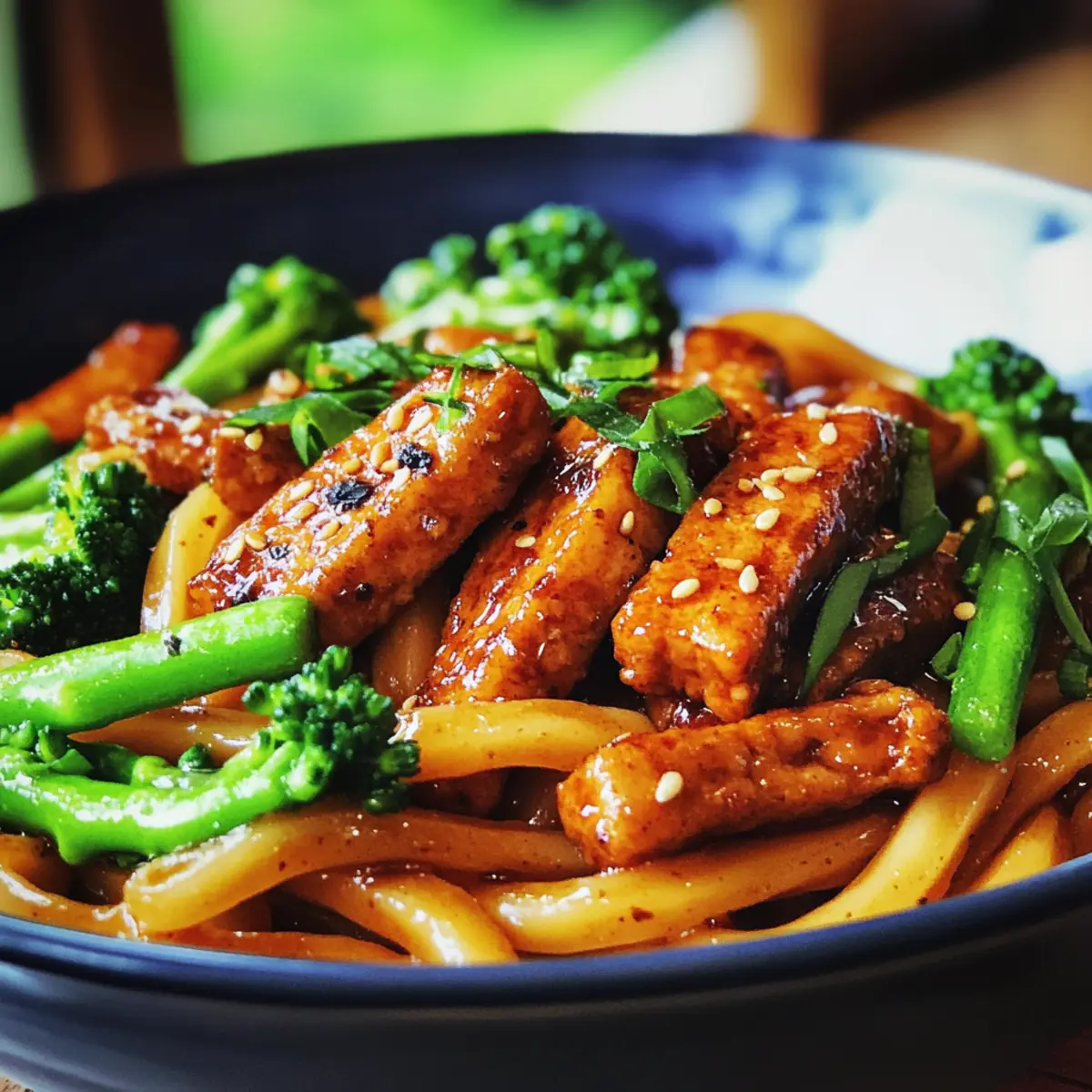
The savory aroma of sesame oil dancing in the air transports me back to bustling street markets filled with mouthwatering dishes. One recipe that never fails to bring me comfort is Vegan Sesame Yaki Udon Noodles—a quick meal that combines thick, chewy noodles with a rich, umami-laden sauce. With options to add homemade seitan strips or baked tofu, this delightful stir-fry not only packs a punch in flavor but is also incredibly easy to whip up on busy weeknights. The irresistible textures and hearty components make this dish a true crowd-pleaser, effortlessly elevating your dinner experience. Ready to dive into a bowl of ultimate comfort? Let’s get cooking!
Why Are These Noodles So Special?
Quick and Easy: With just 30 minutes required, you’ll have a satisfying meal ready without a fuss.
Rich Flavor: The savory sesame sauce envelops each noodle strand, creating a delicious, comforting experience that you’ll want to repeat.
Versatile Proteins: Whether you choose homemade seitan or baked tofu, the options are flexible, catering to all tastes and dietary preferences.
Crowd-Pleaser: Perfect for family dinners or potlucks, these noodles are guaranteed to impress even those who usually shy away from vegan dishes.
Pair this dish with some vegan egg rolls for a complete feast that friends and family will rave about!
Vegan Sesame Yaki Udon Noodles Ingredients
-
For the Noodles
• Fresh Udon Noodles – Provide a thick, chewy texture; substitute with dry udon or rice noodles, adjusting cooking times accordingly. -
For the Vegetables
• Yellow Onion – Adds sweetness and depth to flavor; no substitution needed.
• Broccolini (or Broccoli) – Offers green color and nutritional benefits; replace with any seasonal vegetable like baby bok choy. -
For the Protein
• Homemade Vegan Seitan Beef – Acts as the protein source; store-bought seitan can save preparation time.
• Baked Tofu – A great alternative for protein; opt for extra-firm tofu for the best texture. -
For the Sauce
• Sesame Oil – Used for cooking to impart a nutty flavor; can be substituted with a neutral oil if necessary.
• Toasted Sesame Oil – Enhances the aroma and flavor of the dish; substitute with more neutral oil if unavailable.
• Rice Vinegar – Provides a touch of acidity to balance flavors; swap with apple cider vinegar if needed.
• Minced Garlic – Delivers robust flavor; freshly minced is preferred for aromatic intensity.
• Minced Ginger – Adds warmth and spice; use fresh ginger for best results or dried ginger as an alternative.
• Agave Nectar or Maple Syrup – Sweetness to balance savory flavors; brown sugar can also be used.
• Light Brown Sugar – Sweetens the sauce; white sugar is a suitable substitute.
• Sambal Oelek or Sriracha – Adds heat; adjust based on spice preference and can be omitted for a milder dish.
• Soy Sauce (or Dark Soy Sauce) – Provides rich umami flavor; tamari works as a gluten-free alternative.
• Water – Helps thin the sauce; no substitutions needed.
• Cornstarch – Thickens the sauce to achieve the desired consistency; arrowroot powder can also be used.
Dive into making these Vegan Sesame Yaki Udon Noodles—a meal that not only nourishes but satisfies with every delicious bite!
Step‑by‑Step Instructions for Vegan Sesame Yaki Udon Noodles
Step 1: Prep Your Protein
Begin by preparing your protein source. If you’re making homemade vegan seitan, ensure it’s cooked and sliced into strips. For baked tofu, chop the extra-firm tofu into cubes after pressing out excess moisture. Prepping your protein upfront allows you to finish the Vegan Sesame Yaki Udon Noodles without delay and ensures they’re perfectly incorporated late in the cooking process.
Step 2: Sauté the Onion
In a large skillet or wok, heat 2 tablespoons of sesame oil over medium heat. Once hot, add the chopped yellow onion and sauté for about 5 minutes until the onions turn translucent and fragrant. Stir frequently to prevent sticking and ensure even cooking. This step lays the foundation for a rich flavor in your Vegan Sesame Yaki Udon Noodles.
Step 3: Incorporate the Broccolini
Next, stir in the chopped broccolini along with a splash of water. Cook the mixture for about 6–8 minutes, stirring occasionally until the broccolini softens and the water evaporates. You want the greens to retain some crunch while combining their vibrant flavor with the sautéed onions, adding depth to your noodle dish.
Step 4: Whisk Together the Sauce
While the vegetables cook, whip up your sauce. In a bowl, combine your soy sauce, rice vinegar, minced garlic, minced ginger, agave nectar, and light brown sugar. Reserve 2 tablespoons of this mixture and whisk with cornstarch in a separate small bowl to create a slurry. This will help thicken your sauce later, ensuring that your Vegan Sesame Yaki Udon Noodles are perfectly coated.
Step 5: Combine Noodles and Sauce
Add the fresh udon noodles directly to the skillet, giving them a gentle toss to incorporate. Cover the pan and let the noodles steam for 2–3 minutes until heated through. After that, pour in half of the prepared sauce, stirring gently to coat the noodles in the savory undertones, creating a luscious base for your stir-fry.
Step 6: Stir in the Protein and Sauce
Now it’s time to add your protein! Incorporate your prepared seitan or tofu, along with the remaining sauce and the cornstarch slurry. Stir vigorously for about 3–4 minutes, or until the sauce thickens and beautifully coats every strand of your Vegan Sesame Yaki Udon Noodles. The noodles should now be heated through and glossy, signaling that they’re ready to serve.
Step 7: Serve and Garnish
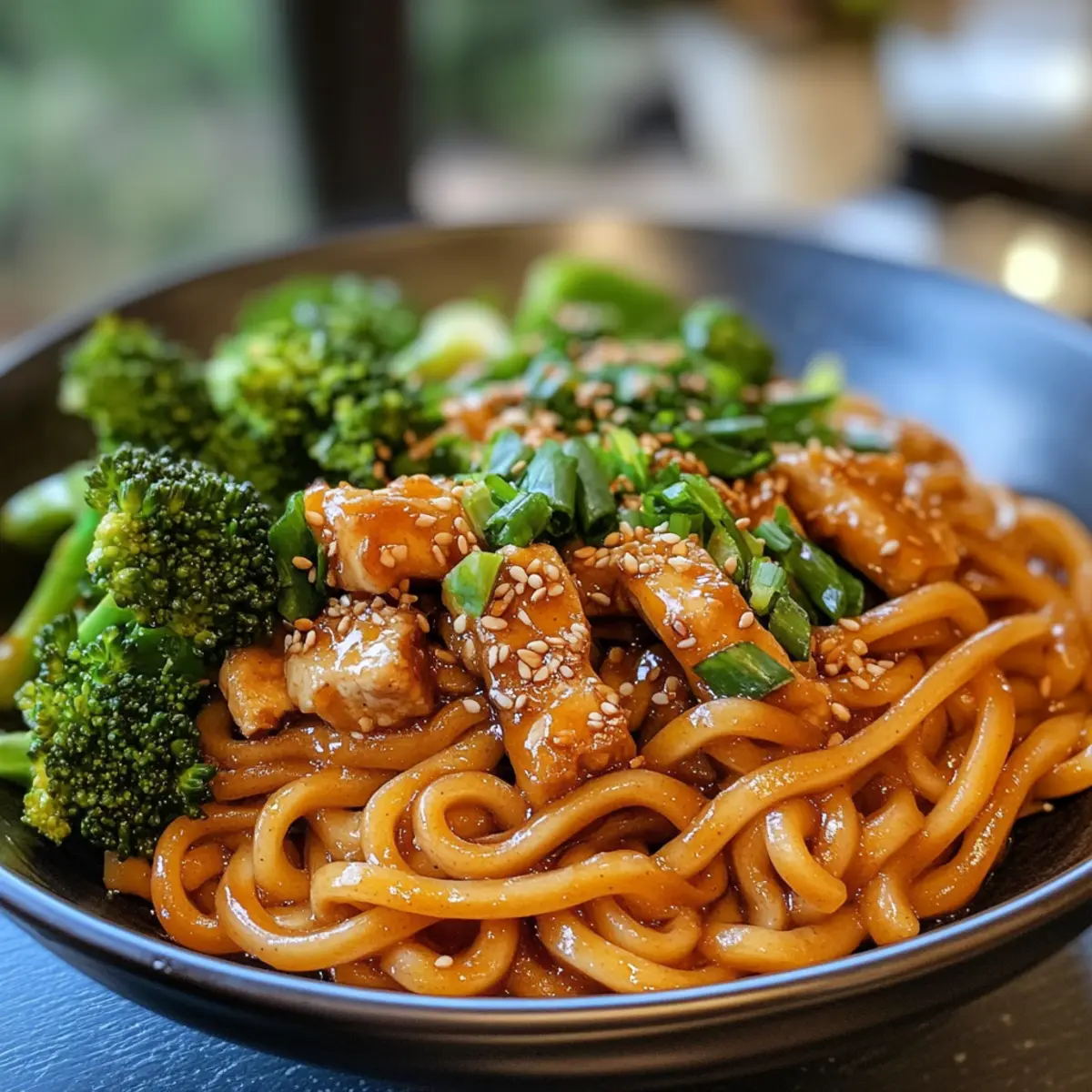
Finally, remove the skillet from heat and plate the Vegan Sesame Yaki Udon Noodles. Garnish with freshly chopped cilantro, sliced spring onions, and a sprinkle of sesame seeds for added texture and flavor. Serving warm, this dish is a satisfying, visually appealing reflection of your cooking effort, perfect for family gatherings or a cozy night in.
What to Serve with Vegan Sesame Yaki Udon Noodles
There’s nothing quite like a lush bowl of noodles to make your mealtime cozy and fulfilling.
-
Crispy Vegan Egg Rolls: The flaky wrapper and savory filling provide a wonderful crunch, balancing the soft texture of the noodles beautifully.
-
Fresh Garden Salad: A light mix of greens and colorful veggies adds a refreshing contrast to the rich, savory flavors of the udon.
-
Steamed Edamame: Easy to prepare and fun to eat, these tender young soybeans offer a protein boost and a slight earthiness.
-
Pickled Vegetables: Adding tangy, crunchy pickles brings a delightful pop of flavor and liveliness to your plate.
Serve alongside a chilled sparkling water with a slice of lemon for a refreshing drink that complements the meal’s flavors.
-
Mango Sorbet: A fruity dessert that cools your palate after the savory noodles, leaving you feeling refreshed and satisfied.
-
Coconut Milk Rice Pudding: Silky and sweet, this creamy treat gives a wonderful texture contrast for a rounded meal experience.
How to Store and Freeze Vegan Sesame Yaki Udon Noodles
Fridge: Store leftovers in an airtight container for up to 5 days. Reheat gently in a pan on medium heat to retain noodle texture.
Freezer: Freeze the noodle dish in freezer-safe containers for up to 3 months. Thaw in the fridge overnight before reheating.
Reheating: For best results, reheat in a skillet with a splash of water or broth to bring the sauce back to life while warming through.
Airtight Storage: Ensure to cool the Vegan Sesame Yaki Udon Noodles to room temperature first to avoid condensation in the container, which can lead to sogginess.
Vegan Sesame Yaki Udon Noodles Variations
Feel free to let your creativity shine as you customize these delicious noodles! If your taste buds are ready for something new, try these exciting twists.
-
Alternative Protein: Swap homemade seitan with store-bought seitan or extra-firm tofu if you’re short on time. Both options keep the meal quick yet satisfying.
-
Veggie Swap: Replace broccolini with bell peppers, snap peas, or carrots for more color and crunch. Each vegetable brings its unique flavor, adding variety to your stir-fry.
-
Gluten-Free: Use gluten-free udon noodles or rice noodles instead of traditional udon for a gluten-free option. This makes the dish accessible without sacrificing flavor.
-
Flavor Boost: Add a splash of lime juice just before serving for a zesty brightness. The citrus elevates the dish, giving it a refreshing kick that complements the savory sauce perfectly.
-
Noodle Variety: Experiment with soba noodles for a slightly different texture and nutty flavor. This alternative can transform the dish while still being hearty and filling.
-
Spicy Kick: Stir in some chili paste or additional sambal oelek for a spicier version. Adjust the heat based on your preference, creating a warm dish that ignites your palate.
-
Creamy Twist: Mix in a dollop of coconut milk to the sauce for a creamy, rich texture. This adds a luxurious mouthfeel that pairs beautifully with the udon noodles.
-
Herbaceous Touch: Toss in fresh herbs like basil or mint before serving. Adding herbs brightens the dish and enhances its aromatic profile, bringing a garden-fresh element to each bite.
For an extra comfort food experience, consider serving these noodles alongside some crispy vegan egg rolls. They make for a delightful meal that will satisfy everyone at the table, including those who might be skeptical of vegan dishes.
Make Ahead Options
These Vegan Sesame Yaki Udon Noodles are perfect for meal prep enthusiasts! You can prepare the protein, whether homemade vegan seitan strips or baked tofu, up to 3 days in advance. Simply cook the protein, let it cool, and store it in an airtight container in the fridge. Additionally, you can mix the sauce (excluding the cornstarch) and refrigerate it for up to 48 hours. When you’re ready to serve, just sauté the onions and broccolini, add the noodles, and toss in your prepped protein and sauce. This approach ensures your dish retains its delicious flavor and texture, making weeknight dinners a breeze!
Expert Tips for Vegan Sesame Yaki Udon Noodles
-
Prep Ahead: Prepare your homemade seitan or baked tofu in advance to save time and streamline cooking for your Vegan Sesame Yaki Udon Noodles.
-
Wok Wonders: Use a wok if you have one. It provides even heat distribution and allows for the perfect caramelization of the noodles.
-
Don’t Overcrowd: Avoid overcrowding the wok or skillet. Cook in batches if necessary to ensure even cooking and prevent sogginess.
-
Gentle Toss: Toss the noodles carefully to avoid breaking them. Maintaining their chewy texture is key for the ultimate comfort food experience.
-
Taste as You Go: Always taste the sauce before adding it to the noodles. Adjust sweetness or heat according to your preference for perfect flavor balance.
Vegan Sesame Yaki Udon Noodles Recipe FAQs
What’s the best way to choose fresh udon noodles?
When selecting fresh udon noodles, look for a package that feels firm and has a slightly chewy texture. You’ll want to avoid any that appear slimy or have dark spots all over, which may indicate spoilage. Fresh udon noodles should be stored in the refrigerator and used before the expiration date for optimum taste.
How long can I store leftovers in the fridge?
You can store left over Vegan Sesame Yaki Udon Noodles in an airtight container in the refrigerator for up to 5 days. Be sure to let the noodles cool to room temperature before sealing to prevent moisture buildup, which can lead to sogginess.
Can I freeze Vegan Sesame Yaki Udon Noodles?
Absolutely! You can freeze your Vegan Sesame Yaki Udon Noodles in freezer-safe containers for up to 3 months. When ready to enjoy, simply thaw the container in the fridge overnight and reheat it gently in a skillet with a splash of water or vegetable broth for best results.
What should I do if the sauce is too thick?
If you find that the sauce has thickened too much during cooking, don’t worry! Simply add a little water, vegetable broth, or even a splash of soy sauce while gently stirring over low heat until you achieve your desired consistency. This will help loosen it up beautifully without losing flavor.
Are there any common allergens in this recipe?
Yes, this recipe contains soy products and may pose an allergy risk to individuals with soy allergies. If you’re serving this dish to guests, it’s a good idea to check for any dietary restrictions. You can also substitute soy sauce with a gluten-free tamari version, making it a safe option for those with gluten sensitivities.
Can I adjust the spice level for my family?
Definitely! If you prefer a milder dish, you can omit the sambal oelek or sriracha altogether. For those who enjoy a little kick, consider starting with a smaller amount and gradually increasing it until you reach the desired heat level. The more the merrier when it comes to flavor adjustments!
Savory Vegan Sesame Yaki Udon Noodles in 30 Minutes
Ingredients
Equipment
Method
- Prepare your protein source. If making homemade seitan, cook and slice into strips. For baked tofu, chop into cubes after pressing out excess moisture.
- In a large skillet or wok, heat 2 tablespoons of sesame oil over medium heat. Add the chopped yellow onion and sauté for about 5 minutes until translucent.
- Stir in the chopped broccolini with a splash of water. Cook for about 6–8 minutes until softened.
- In a bowl, combine soy sauce, rice vinegar, minced garlic, minced ginger, agave nectar, and light brown sugar. Reserve 2 tablespoons and mix with cornstarch in a small bowl.
- Add the fresh udon noodles to the skillet. Cover and steam for 2–3 minutes until heated through. Pour in half of the prepared sauce and stir gently.
- Add your protein, remaining sauce, and cornstarch slurry. Stir vigorously for 3–4 minutes until the sauce thickens.
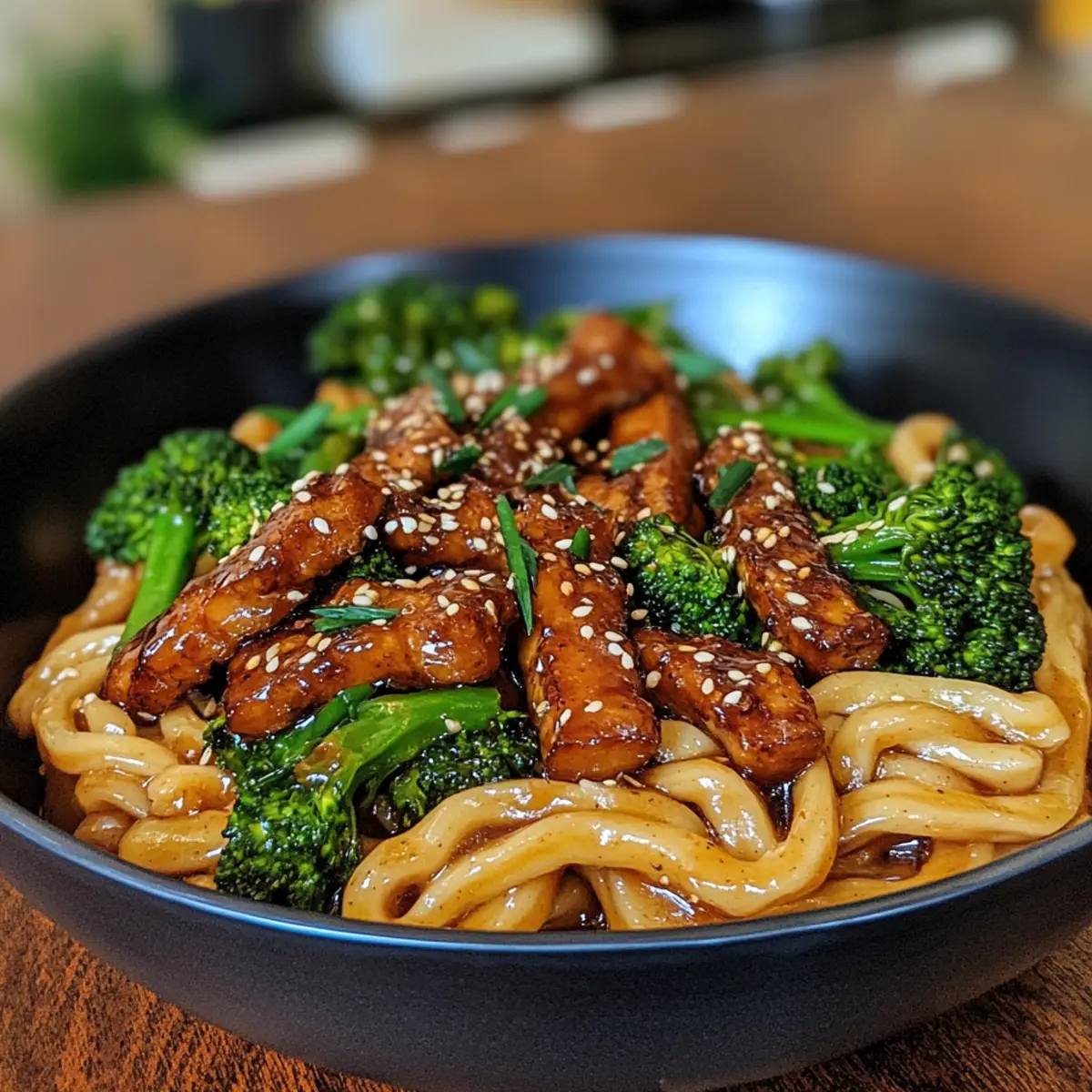
- Remove from heat and plate the noodles. Garnish with cilantro, spring onions, and sesame seeds.