

The moment you take your first bite of a Portuguese custard tart, you’re swept away to the sun-kissed streets of Lisbon, where each flaky pastry whispers stories of tradition. These delightful treats, known as Pastéis de Nata, are not just a dessert but a celebration of creamy goodness encased in a perfectly crunchy crust. What I adore about making these luscious tarts is the ease of preparation; with just a few simple ingredients, you can achieve a bakery-quality masterpiece at home. Plus, they’re a guaranteed crowd-pleaser, perfect for impressing guests at your next gathering or simply indulging yourself after dinner. Curious to learn how you can whip up these irresistible pastries and maybe even add your twist? Let’s dive in!
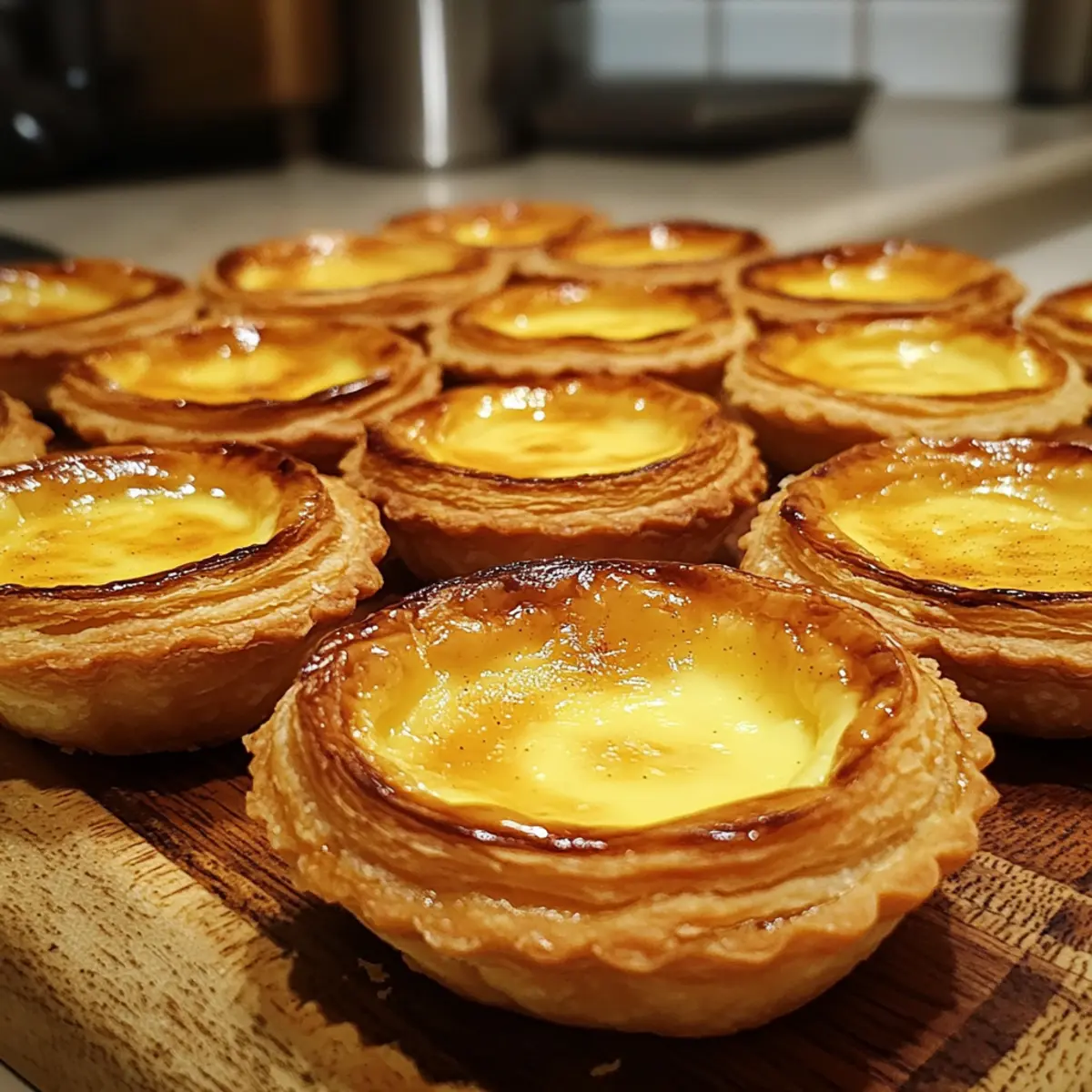
Why Are Portuguese Custard Tarts So Loved?
Irresistible Flavors: The creamy custard, enriched with vanilla and a hint of lemon zest, delivers a burst of flavor that dances on your palate.
A Simple Process: With just a few basic ingredients, anyone can create these delectable tarts, making them accessible for both novice bakers and seasoned chefs.
Endless Variations: Want to add a twist? Experiment with fruit-infused, chocolate, or coconut flavors that can transform the classic recipe into your own signature dish.
Perfectly Golden: The contrast of a flaky, golden crust with a rich filling makes each tart a work of art, sure to impress at any gathering.
Freshly Baked Joy: There’s nothing like the aroma of these pastries baking in your oven, filling your home with that inviting, cozy bakery scent that brings everyone to the kitchen.
Ready to get started? Check out our detailed guide on how to make these scrumptious pastéis de nata!
Portuguese Custard Tarts Ingredients
• To create these delightful Portuguese custard tarts at home, gather your ingredients for an unforgettable baking adventure!
For the Pastry
- Puff Pastry – Use thawed, store-bought puff pastry for an effortless flaky texture.
For the Custard
- Heavy Cream – Adds richness and creaminess to the custard filling.
- Whole Milk – Balances the richness; feel free to substitute with lower-fat milk for a lighter option.
- Granulated Sugar – Sweetens the custard filling; adjust to taste for your preferred sweetness level.
- All-Purpose Flour – Helps stabilize the custard mixture; gluten-free flour works if needed.
- Egg Yolks – Provide the structure and richness; using large eggs will yield the best results.
- Vanilla Extract – Enhances the overall flavor; opt for high-quality extract for captivating taste.
- Ground Cinnamon – Adds warmth and depth; this is optional and can be substituted with nutmeg if desired.
- Lemon Zest – Brightens the custard’s flavor; consider using orange zest for a different citrus note.
Get ready to indulge in these rich, delectable Portuguese custard tarts, and enjoy the delightful experience of homemade baking!
Step‑by‑Step Instructions for Portuguese Custard Tarts
Step 1: Prepare Pastry
Begin by rolling out the thawed puff pastry on a floured surface until it’s about ⅛ inch thick. Use a round cutter to cut out circles that will fit into your muffin tin wells. Ensure the circles are a bit larger than the tin for a proper overhang. Keep the pastry covered with a kitchen towel to prevent drying out as you prepare the tart shells.
Step 2: Form Tart Shells
Carefully press the pastry circles into the wells of your greased muffin tin, shaping them to form shallow tart shells. Make sure the edges are neatly crimped to support the custard filling later. This step is crucial for achieving that beautifully flaky texture in your Portuguese custard tarts. Chill the formed shells in the refrigerator while you prepare the custard mixture.
Step 3: Make Custard
In a saucepan over medium heat, combine heavy cream and whole milk, stirring occasionally until it just reaches a simmer. Meanwhile, whisk together the egg yolks, granulated sugar, and all-purpose flour in a separate bowl until smooth. Slowly pour the hot milk mixture into the egg mixture, whisking vigorously to prevent curdling. This blend is what gives the custard filling its rich, creamy texture.
Step 4: Cook Custard
Return the custard mixture to the saucepan, cooking on medium heat while stirring continuously until it thickens, approximately 5-7 minutes. You want it to coat the back of a spoon and be slightly wobbly when done. Remove from heat and stir in the vanilla extract and lemon zest. Allow the custard to cool slightly before filling the pastry shells.
Step 5: Fill Shells
Preheat your oven to 400°F (200°C) while you carefully pour the custard into the chilled pastry shells. Fill each shell almost to the top, leaving just a little space to prevent overflow during baking. Be careful not to disrupt the shell structure; a steady hand will ensure each tart is perfectly filled and ready for baking.
Step 6: Bake
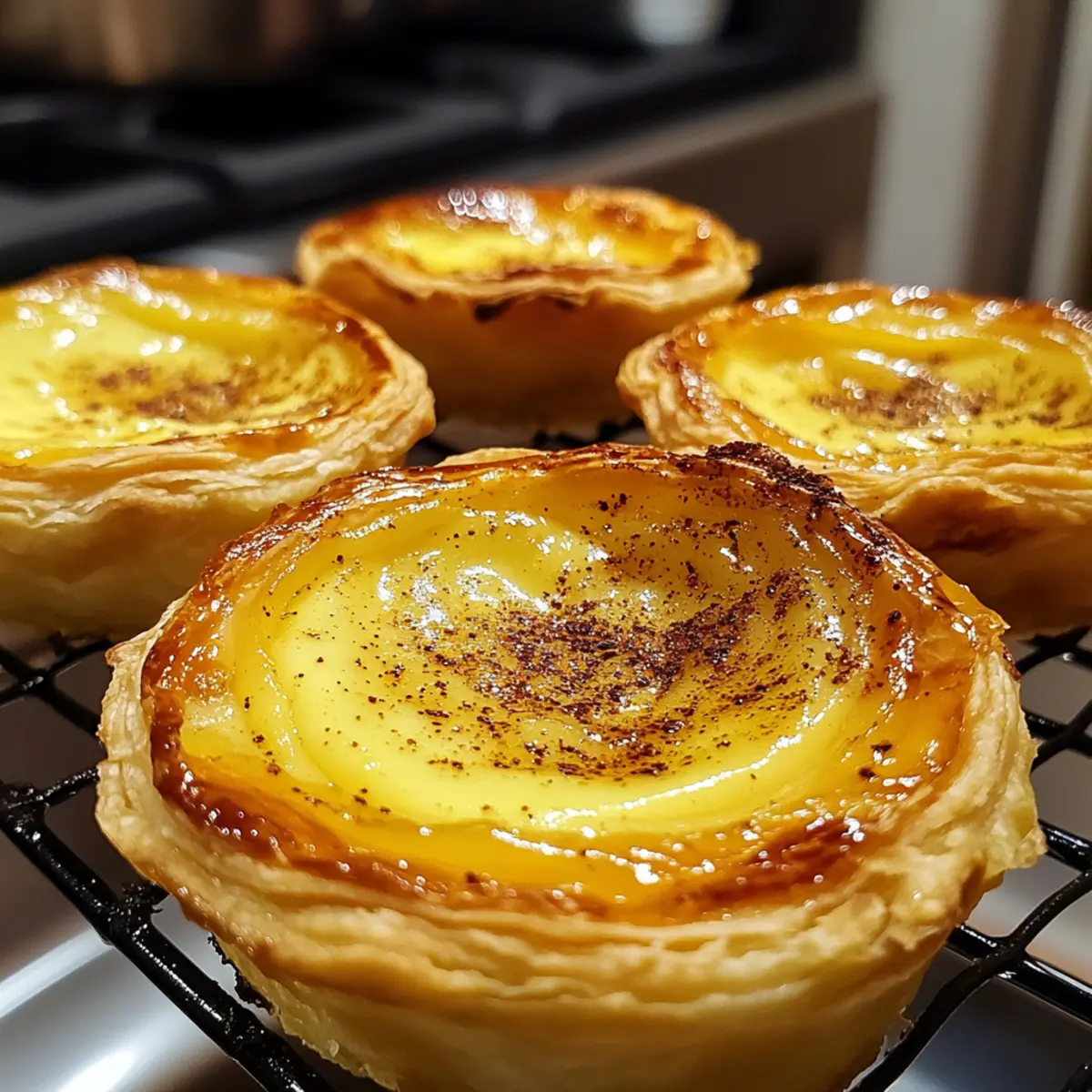
Place your filled muffin tin in the preheated oven and bake for 15-20 minutes. Watch closely as the custards puff up and take on a beautiful golden color. The edges of the pastry should be crispy and well-baked, while the custard should be set but still slightly trembling in the center, indicating a creamy filling.
Step 7: Cool & Serve
Once baked, remove the Portuguese custard tarts from the oven and let them cool in the tin for about 10 minutes. Then, carefully transfer each tart to a wire rack to cool completely. These tarts are best enjoyed warm or at room temperature; their flaky pastry and rich filling will be irresistible!
Make Ahead Options
These Portuguese Custard Tarts are perfect for busy home cooks looking to save time during the week! You can prepare the pastry shells up to 24 hours in advance by rolling out the puff pastry, cutting it into circles, and pressing them into the muffin tin. Simply cover the formed shells with plastic wrap and refrigerate until ready to use. Additionally, the custard filling can be made and refrigerated for up to 3 days; just ensure it cools completely before sealing it in an airtight container to maintain its creamy texture. When you’re ready to bake, fill the chilled shells with the custard and pop them in the oven for a fresh, warm treat that’s just as delicious as if you’d made them from scratch that day!
Portuguese Custard Tarts Variations & Substitutions
Feel free to let your creativity flow as you customize these delightful pastries to suit your taste and dietary needs!
- Dairy-Free: Substitute heavy cream and whole milk with almond or oat milk for a creamy, lactose-free version.
- Gluten-Free: Use a gluten-free flour blend in place of all-purpose flour for a delicious gluten-free custard.
- Chocolate Delight: Melt dark chocolate into the custard mixture for a rich, decadent twist that chocolate lovers will adore.
- Citrus Zest: Experiment with orange or lime zest instead of lemon for a different citrus flavor that brightens the custard beautifully.
- Nutty Crunch: Top the tarts with chopped pistachios or almonds after baking for a delightful crunch and nutty flavor contrast.
- Seasonal Fruit: Top with fresh berries or sliced stone fruits for a refreshing seasonal addition that adds color and sweetness.
- Spiced Variations: Add a dash of cardamom or ginger to the custard for an exciting spice infusion that elevates the flavor profile.
- Maple Sweetness: Swap granulated sugar for maple syrup for a warm, natural sweetness that complements the custard’s creaminess.
These adaptations perfectly suit various dietary preferences and enable you to explore unique flavors. For more inspiration on ingredient swaps, check out our article on how to make great gluten-free desserts or explore ways to infuse seasonal fruits into your baking!
What to Serve with Flaky Portuguese Custard Tarts?
Imagine your delightful tarts served alongside carefully chosen pairings that enhance every bite and create a heartfelt culinary experience.
- Rich Coffee: The deep, robust flavors of a freshly brewed coffee create a perfect contrast, amplifying the creamy sweetness of the tarts.
- Lightly Whipped Cream: A dollop of lightly sweetened whipped cream adds an airy texture that complements the richness of the custard, making every bite heavenly.
- Fruity Sorbet: A tangy mango or raspberry sorbet provides a refreshing counterpoint to the warm tarts, offering a burst of flavor that refreshes the palate.
- Fruit Salad: Bright berries or citrus fruits in a simple syrup add a fresh, juicy element, contrasting nicely with the dense custard. Enjoy the colorful presentation and healthful aspect!
- Espresso: This concentrated coffee punch pulls out the vanilla and cinnamon notes in the tarts, creating a luxurious after-meal pleasure for coffee lovers.
- Chocolate Drizzle: Add a drizzle of warm chocolate sauce for an indulgent twist, elevating the tarts to a new level of decadence that chocolate lovers can’t resist!
- Vanilla Ice Cream: A scoop of creamy vanilla ice cream melts deliciously over the warm tarts, creating a delightful blend of flavors and textures.
- Chai Latte: The spiced warmth of a chai latte pairs beautifully with custard tarts, making for a cozy dessert experience that’s hard to resist.
Embrace these pairings to create a dessert table that celebrates the heartwarming flavors of your Portuguese custard tarts!
Storage Tips for Portuguese Custard Tarts
Room Temperature: Portuguese custard tarts are best enjoyed fresh but can be left at room temperature for up to 6 hours if served the same day.
Fridge: If you have leftovers, store them in an airtight container in the refrigerator for up to 1-2 days. This will help maintain their quality, though the crust may lose some crispness.
Freezer: For longer storage, you can freeze the unbaked tart shells or baked custard tarts for up to 1 month. Wrap them well in plastic wrap and aluminum foil to prevent freezer burn.
Reheating: To reheat from the fridge, warm the tarts in a preheated oven at 350°F (175°C) for about 10 minutes until heated through. For frozen tarts, thaw in the fridge overnight and follow the same reheating instructions. Enjoy the comforting flavors of your Portuguese custard tarts!
Expert Tips for Portuguese Custard Tarts
Thaw the Pastry: Ensure your puff pastry is fully thawed before use to avoid any tearing when shaping the tart shells.
Watch the Temperature: Maintain medium heat when cooking the custard to prevent the egg yolks from scrambling, resulting in a smooth filling.
Fill Just Right: Avoid overfilling the tart shells; leave a little space at the top to allow for puffing and rising during baking.
Check for Doneness: The custard should be golden brown and slightly wobbly in the center when done. A perfect balance between the filling and crust is essential.
Play with Flavors: Don’t hesitate to personalize your Portuguese custard tarts. Add spices, fruits, or even chocolate to create unique variations that delight your friends and family!
Portuguese Custard Tarts Recipe FAQs
What type of puff pastry should I use for Portuguese custard tarts?
Absolutely! I recommend using thawed, store-bought puff pastry for an effortless flaky texture. Ensure it’s completely thawed for easier handling and a better final result.
How should I store leftover Portuguese custard tarts?
If you have leftovers, store them in an airtight container in the refrigerator for up to 1-2 days. While they can be left at room temperature for up to 6 hours if served the same day, the crust may lose some crispness in the fridge.
Can I freeze Portuguese custard tarts?
Yes, you can freeze both unbaked tart shells and baked custard tarts! For unbaked shells, wrap them well in plastic wrap and then in aluminum foil, storing for up to 1 month. For baked tarts, let them cool completely before wrapping and freezing. To reheat from the fridge, warm them in a preheated oven at 350°F (175°C) for about 10 minutes.
What if my custard is too runny?
Don’t worry! If your custard isn’t thickening as expected, ensure you’re cooking it over medium heat and stirring continuously. This helps prevent the egg yolks from scrambling. The custard should be cooked for about 5-7 minutes, ideally thick enough to coat the back of a spoon while being slightly wobbly in the center when done.
Are Portuguese custard tarts safe for people with dietary restrictions?
These tarts contain eggs and dairy, so they may not be suitable for those with egg or dairy allergies. However, you can explore alternatives like using a dairy-free milk and egg replacement to make modifications based on dietary needs. Just remember, the textures and flavors will differ slightly!
How do I know when my Portuguese custard tarts are done baking?
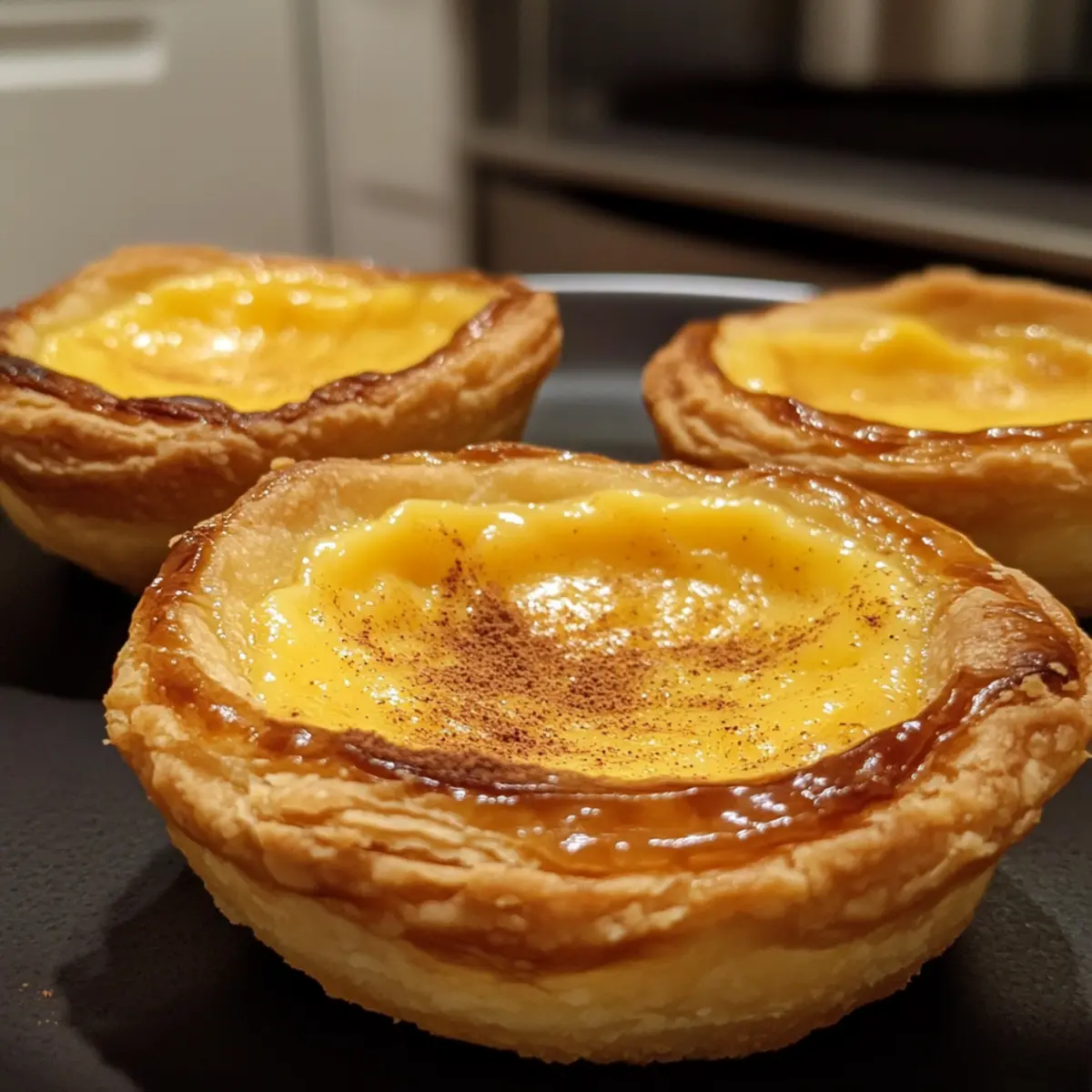
Great question! Look for a golden brown color on the edges of the pastry and a puffed up custard center. It should still have a slight wobble when you gently shake the muffin tin, indicating that the custard is set but creamy inside. Enjoy your baking adventure!

Delightful Portuguese Custard Tarts You Can Make at Home
Ingredients
Equipment
Method
- Begin by rolling out the thawed puff pastry on a floured surface until it's about ⅛ inch thick. Cut out circles that fit into your muffin tin.
- Press the pastry circles into the greased muffin tin, shaping them into shallow tart shells. Chill in the refrigerator while preparing custard.
- In a saucepan over medium heat, combine heavy cream and whole milk until it simmers. Whisk egg yolks, sugar, and flour until smooth in a separate bowl.
- Slowly pour the hot milk mixture into the egg mixture, whisking to prevent curdling. Return to heat until thickened, about 5-7 minutes.
- Remove from heat, stir in vanilla extract and lemon zest, and let cool slightly before filling the pastry shells.
- Preheat oven to 400°F (200°C) and carefully pour custard into the chilled pastry shells, filling just below the top.
- Bake for 15-20 minutes until edges are crispy and custard is slightly trembling in the center.
- Let cool in the tin for about 10 minutes, then transfer to a wire rack to cool completely.