

As I stood in my kitchen, the aroma of toasted sesame oil mingling with the bold notes of gochujang transported me to the bustling streets of Seoul, where bibimbap reigns supreme. Today, I’m excited to share my recipe for authentic homemade Bibimbap Sauce, a quick concoction that you can whip up in just 5 minutes using only 6 simple ingredients. This versatile sauce isn’t just easy to make—it allows you to customize the spice level to suit your taste buds, making it perfect for both the daring and the mildly curious. Whether you’re drizzling it over a colorful rice bowl or using it as a zesty dip for fresh veggies, your meals will never feel mundane again. Ready to elevate your home cooking with the vibrant flavors of Korea? Let’s dive in!
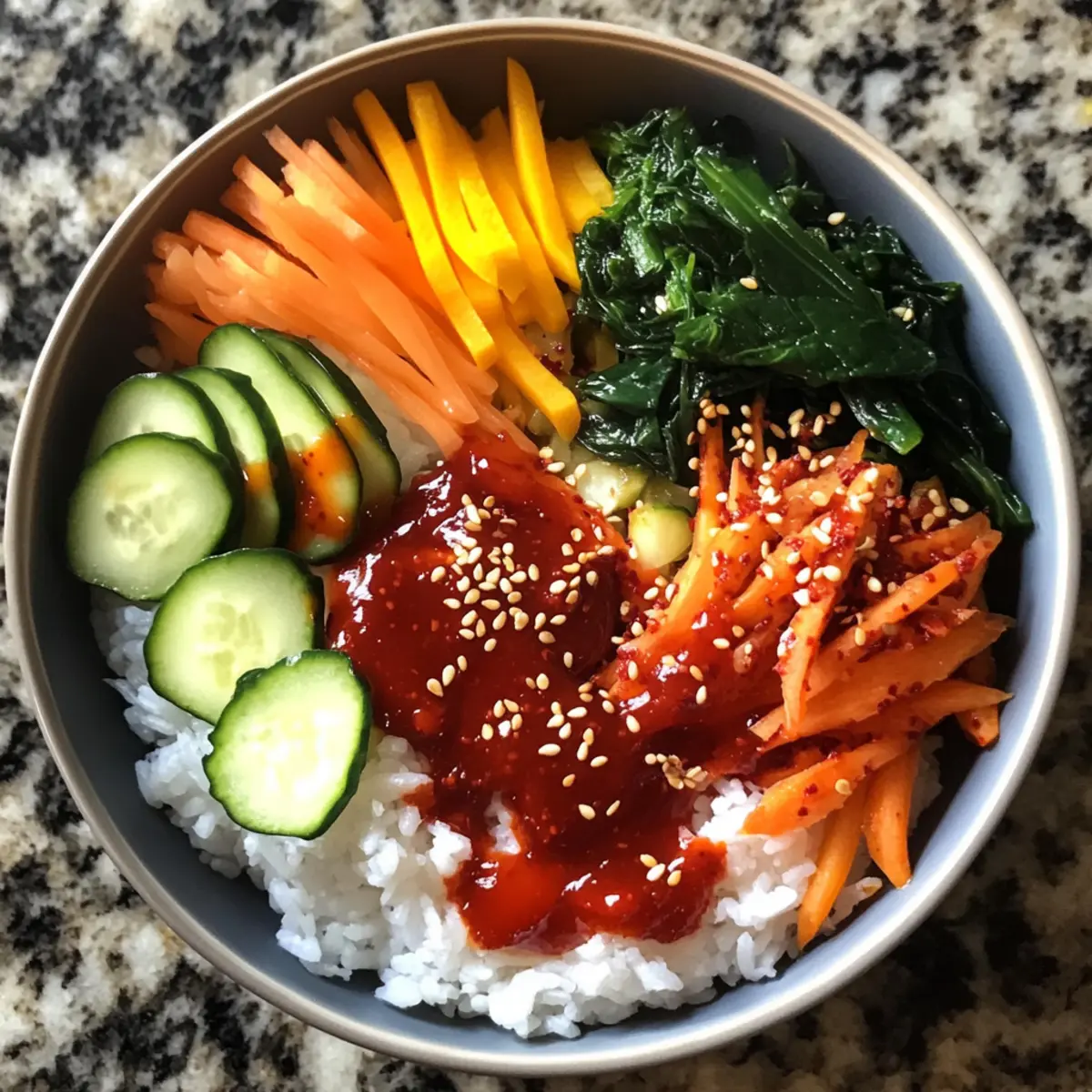
Why is Bibimbap Sauce So Special?
Flavor Explosion: This bibimbap sauce delivers an incredible burst of flavors, combining sweetness, spice, and nuttiness that transforms any dish into a culinary adventure.
Quick and Easy: With just 6 simple ingredients, you can whip this up in 5 minutes, making it the perfect last-minute addition to any meal.
Customizable Spice Levels: Make it your own! Whether you prefer a mild kick or full-blown heat, you can easily adjust the gochujang to tailor the sauce to your liking.
Perfect for Dipping: Not just for bibimbap! This sauce works wonderfully as a dip for fresh veggies or drizzled over grilled chicken—a great companion to your Grilled Chicken Sauce.
Make-Ahead Option: Prepare it ahead of time and store it in the fridge for up to 2 weeks—always have this gem ready to elevate your weeknight dinners!
Bibimbap Sauce Ingredients
For the Base
• Gochujang – This fermented chili paste is the star of your bibimbap sauce, bringing rich spice and depth of flavor.
• Garlic (minced) – Enhances the overall aroma and taste; opt for fresh minced garlic for the best flavor profile.
• Toasted Sesame Oil – This ingredient adds a nutty richness; if you don’t have it, you can use regular sesame oil.
For Sweetness and Balance
• Honey – Sweetens up the sauce to balance the heat; agave nectar works well as a vegan-friendly substitute.
• Sugar – Further rounds out the flavors; adjust or omit based on your sweetness preference.
For Acidity
• Rice Vinegar – Adds that needed tang to brighten up your bibimbap sauce; apple cider vinegar can be used in a pinch.
• Salt (optional) – Enhances the flavor of the sauce; use according to your dietary needs and taste preferences.
Now, gather these simple ingredients, and let the magic of Bibimbap Sauce elevate your homemade meals!
Step‑by‑Step Instructions for Bibimbap Sauce
Step 1: Combine Ingredients
In a medium mixing bowl, gather your ingredients: gochujang, minced garlic, toasted sesame oil, honey, sugar, rice vinegar, and optional salt. Using a spatula or whisk, combine them with a gentle mixing motion until all components are well integrated. The vibrant colors will immediately catch your eye as they blend together, creating a smooth base for your delicious bibimbap sauce.
Step 2: Mix Thoroughly
Continue stirring the mixture for about 30 seconds, ensuring all ingredients are fully combined. You want to achieve a uniform consistency without any lumps. The sauce should feel thick and creamy, with a rich red hue from the gochujang. This vivid mixture is the heart of your bibimbap sauce, ready to add that delightful burst of flavor to your meals.
Step 3: Adjust Flavor
Take a small taste of your bibimbap sauce to check the flavor balance. If you prefer a sweeter taste, gradually add more honey or sugar until it reaches your desired sweetness. If you enjoy more heat, feel free to fold in an extra teaspoon of gochujang, mixing well to combine. Trust your palate to guide you in crafting the perfect sauce for your preferences.
Step 4: Serve or Store
Once you’re satisfied with the flavor, the sauce is ready to be enjoyed! Drizzle it over a colorful bowl of rice, vegetables, or even grilled protein. Alternatively, transfer the sauce to a glass container for storage. Seal it tightly and refrigerate; your homemade bibimbap sauce will stay fresh for up to 2 weeks, always ready to elevate your dishes whenever you need a flavor boost!
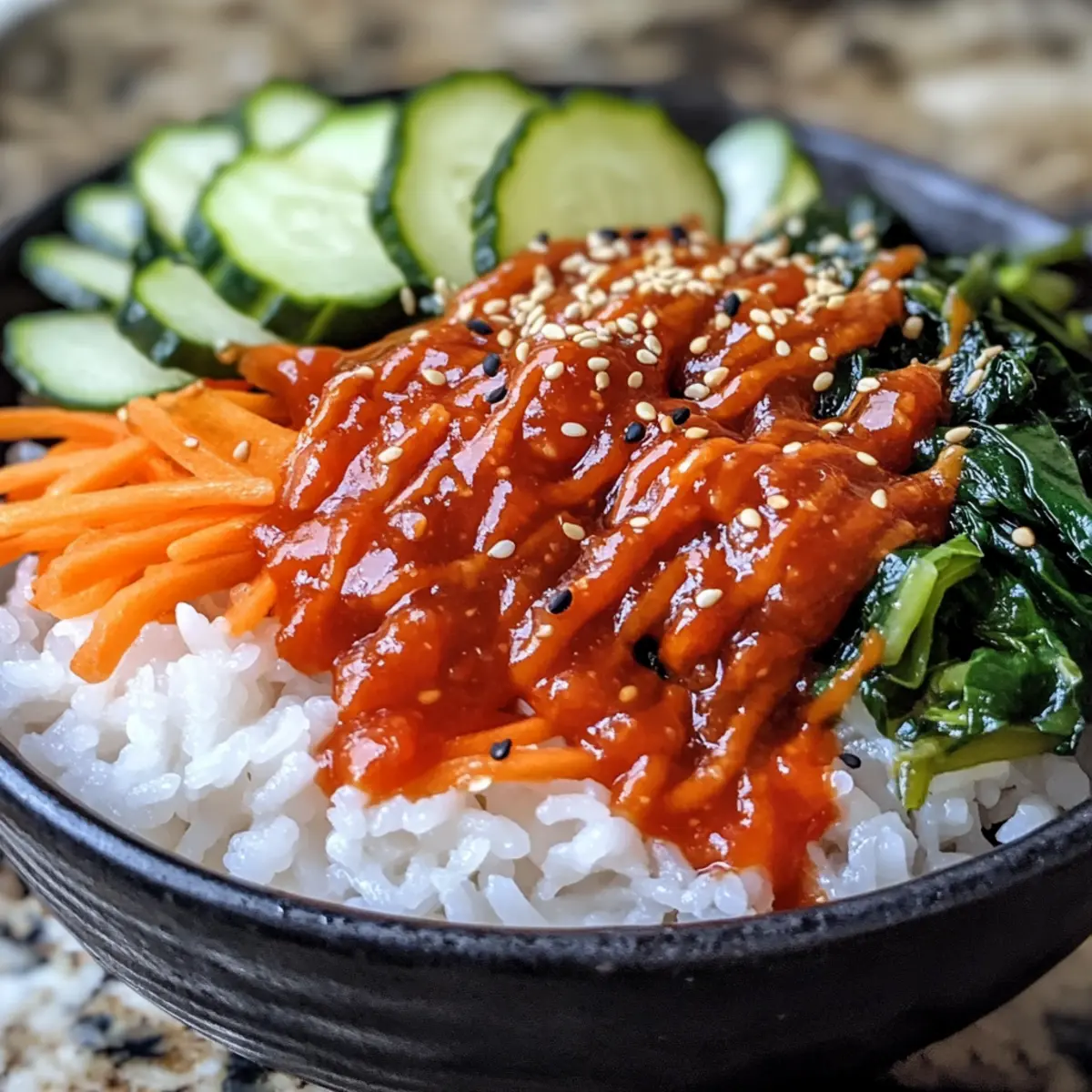
Make Ahead Options
These Bibimbap Sauce preparations are perfect for busy home cooks looking to save time during the week! You can prepare the entire sauce up to 2 weeks in advance by mixing all the ingredients—gochujang, minced garlic, toasted sesame oil, honey, sugar, rice vinegar, and salt—just as the recipe calls for. Store it in a glass container to keep it fresh (this prevents any staining), and refrigerate until you’re ready to use it. When it’s time to enjoy, give the sauce a good stir to re-emulsify the flavors, and drizzle it over your favorite rice bowls or veggies for a quick, flavor-packed meal that’s just as delicious as freshly made!
Bibimbap Sauce Variations
Feel free to personalize your bibimbap sauce with these delightful twists that can lead your taste buds on a culinary journey.
Milder Heat: Reduce gochujang for a gentler flavor, or substitute with a mild chili paste for a more subtle spice. Creating your own balance is key!
Citrusy Kick: Add a splash of fresh lime juice or zest to intensify the sauce’s brightness, enhancing its refreshing flavor profile. A squeeze of citrus really revitalizes the taste experience.
Fresh Ginger: For a zesty addition, incorporate grated ginger into your sauce, bringing warmth and bold flavors that perfectly complement the other ingredients. The aromatic touch will transport you straight to the heart of Korean cuisine!
Maple Syrup: Swap honey for maple syrup to embrace a unique flavor profile—a great option for vegans seeking the same sweetness. This change offers an earthy undertone to your sauce.
Garlic Variations: Roast the garlic before mincing it for a sweeter, caramelized flavor that adds depth. This variation introduces a pleasantly subtle complexity that’s hard to resist.
Nutty Alternatives: Experiment by adding a tablespoon of peanut butter or almond butter for a creamier texture and nutty flavor kick, providing a delicious twist that enriches your bibimbap.
Sweet Soy Blend: Mix in some sweet soy sauce with the honey for a deeper flavor profile, enhancing richness and offering an irresistible sweet-salty balance that makes your bibimbap come alive. Check out how well it pairs with Grilled Chicken Sauce!
Additional Spice: For those who crave more heat, throw in a dash of red pepper flakes or sambal oelek—just a little will elevate your sauce to fiery heights, perfect for spice enthusiasts.
Get creative and make these variations your own as you savor the delightful range of flavors!
Expert Tips for Bibimbap Sauce
Start Small: Begin with a teaspoon of gochujang to gauge spice level; you can always add more if you prefer extra heat.
Mixing Method: Use a whisk for a smooth consistency; a spatula can leave lumps that may affect the texture of your bibimbap sauce.
Flavor Adjustments: Taste as you go! Don’t hesitate to tweak sweetness or acidity—small changes can make a big difference in flavor.
Storage Choices: Opt for a glass container to prevent staining and ensure freshness; your bibimbap sauce can last up to 2 weeks in the fridge.
Try Substitutes: Experiment with ingredients like lime juice instead of vinegar for a twist, or replace honey with brown sugar for a deeper sweetness.
What to Serve with Authentic Homemade Bibimbap Sauce
Elevate your mealtime experience with delicious dishes that harmonize beautifully alongside your homemade bibimbap sauce.
Steamed Jasmine Rice: The fluffy texture of jasmine rice serves as the perfect canvas, soaking up the rich flavors of the sauce, making each bite delightful.
Sautéed Spinach: Quickly sautéed spinach adds a vibrant green, nutritious component that creates a beautiful contrast to the bibimbap sauce’s warmth.
Grilled Tofu Bites: Crispy on the outside and tender inside, grilled tofu absorbs the sauce’s spices and complements its strong flavors, offering a satisfying plant-based protein option.
Korean-Style Pickled Radishes: Adding a refreshing crunch and tang, these pickles cut through the richness of the bibimbap sauce, enhancing the overall flavor profile.
Roasted Sweet Potatoes: Their natural sweetness balances the sauce’s spiciness wonderfully, making for a comforting and well-rounded meal.
Kimchi: A classic Korean side dish, the fermented layers of flavor and heat from kimchi pair exquisitely with the richness of your bibimbap sauce.
Cold Beer or Soju: For a drink pairing, a chilled lager or a glass of soju complements the meal’s flavors, enhancing the dining experience with a refreshing touch.
Storage Tips for Bibimbap Sauce
Fridge: Store your bibimbap sauce in an airtight glass container for freshness; it can last up to 2 weeks in the refrigerator.
Freezer: For longer storage, freeze the sauce in ice cube trays. Once frozen, transfer the cubes to a resealable bag and use them as needed within 3 months.
Reheating: Simply thaw the cubes in the refrigerator overnight. When ready to use, stir well to restore the creamy texture before serving.
Room Temperature: It’s best to avoid leaving the sauce out for extended periods; if served, consume within 2 hours to maintain freshness and flavor.
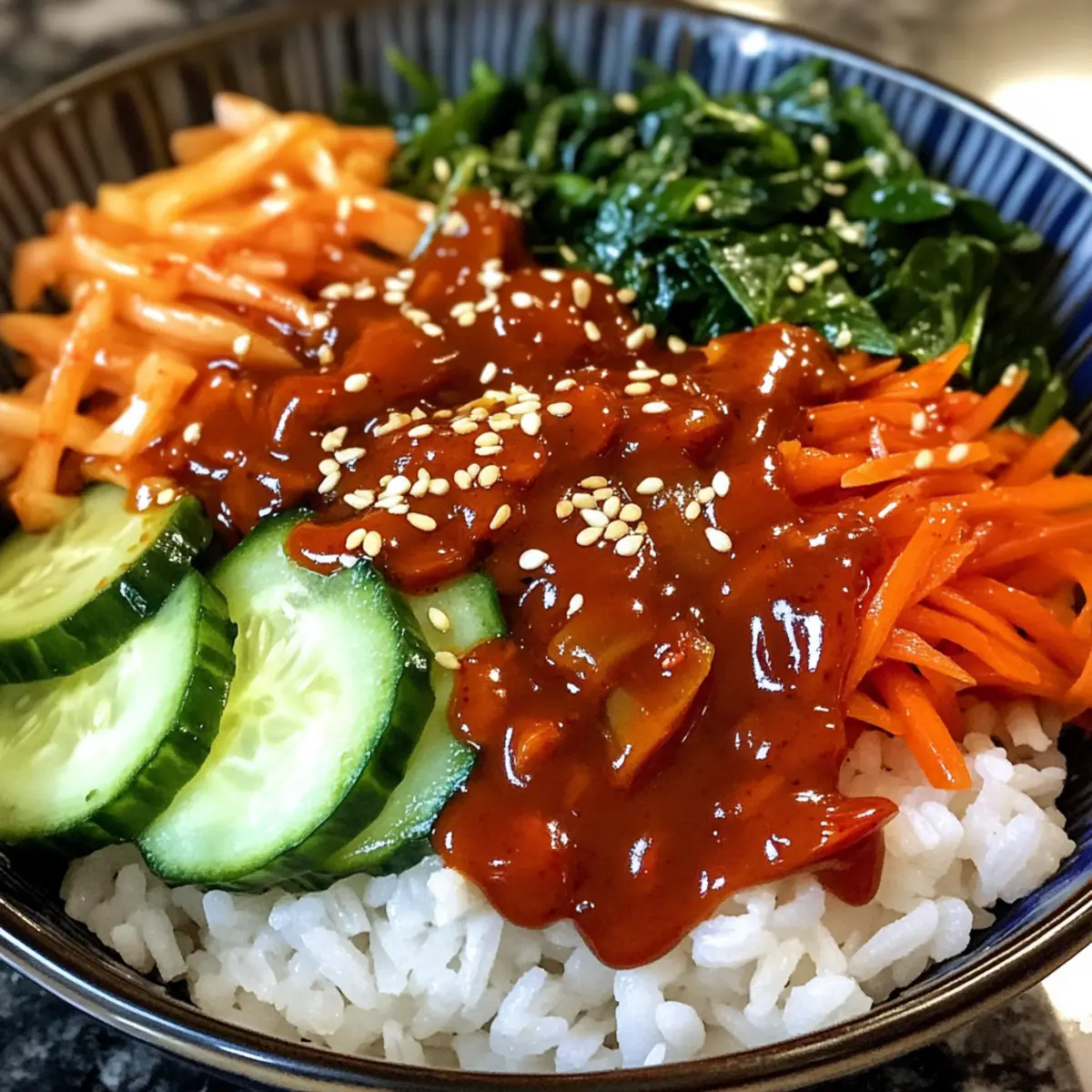
Bibimbap Sauce Recipe FAQs
How do I know if my gochujang is fresh?
Absolutely! Fresh gochujang should have a vibrant red color and a distinct aroma. If you notice any dark spots or an off smell, it may be time to replace it. Stored in a cool, dry place, gochujang can last for up to 1 year.
What’s the best way to store leftover bibimbap sauce?
Very simple! Transfer your bibimbap sauce to an airtight glass container to prevent any staining and ensure freshness. It can last in the refrigerator for up to 2 weeks. Always give it a good stir before using, as ingredients may separate over time.
Can I freeze bibimbap sauce for later use?
Absolutely! For longer storage, pour the sauce into ice cube trays and freeze until solid. Once frozen, transfer the cubes to a resealable bag. You can keep them for up to 3 months. When you need some, just thaw the desired number of cubes in the refrigerator overnight.
What should I do if my bibimbap sauce is too spicy?
Very! If you find the spice level too intense, you can balance it out by adding more honey or sugar to sweeten the sauce. If the sauce is still too hot, try blending in a small amount of plain yogurt or tahini to mellow the spiciness while enhancing creaminess.
Can I use bibimbap sauce with dietary restrictions?
Absolutely! This recipe is vegetarian and can also be made vegan by substituting honey with agave nectar. If you have gluten sensitivities, ensure your gochujang is gluten-free, as some brands may contain wheat. Always taste for allergies based on your specific needs.
How can I make my bibimbap sauce taste more complex?
Very! Consider adding a splash of freshly squeezed lime juice or a teaspoon of grated ginger to enhance the flavor profile. These additions will brighten the sauce and offer a zesty twist. Experiment with other ingredients, like sesame seeds or finely chopped scallions, for added texture and depth!
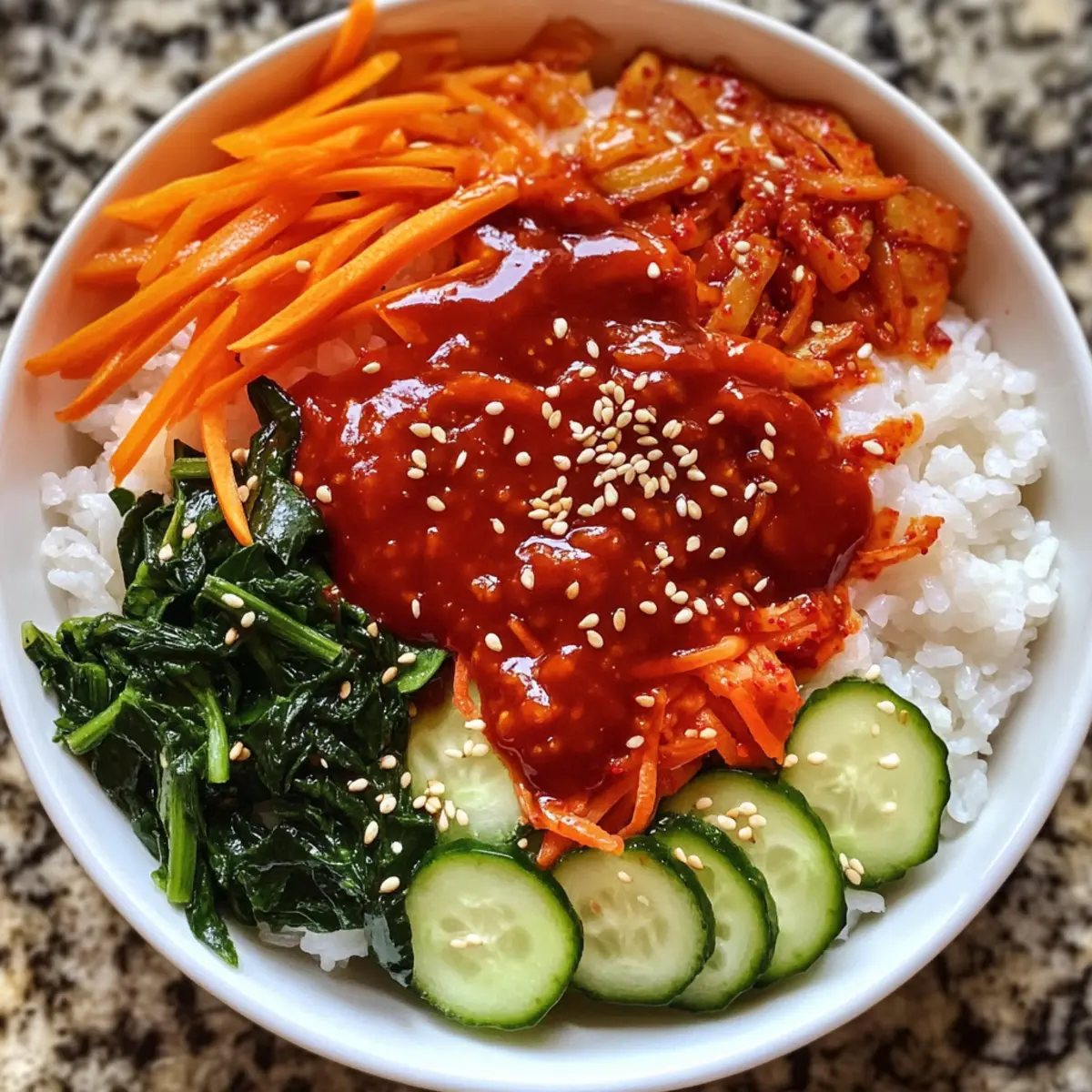
Bowl of Flavor: Easy Bibimbap Sauce You Can Customize
Ingredients
Equipment
Method
- In a medium mixing bowl, gather your ingredients: gochujang, minced garlic, toasted sesame oil, honey, sugar, rice vinegar, and optional salt. Combine them with a spatula or whisk until well integrated.
- Continue stirring for about 30 seconds to achieve a uniform consistency without lumps; the sauce should feel thick and creamy.
- Taste the sauce and adjust sweetness with more honey or sugar, or add more gochujang for extra heat.
- Once satisfied with the flavor, drizzle it over rice, vegetables, or grilled protein, or store it in a glass container in the fridge.