

As I stirred the vibrant purple mixture, the scent of coconuts and sweet ube filled my kitchen, transporting me to the sunny shores of the Philippines. Ube Sago is a delightful dessert that brings a taste of the tropics right to your home. This easy recipe features chewy tapioca pearls dancing in a creamy ube and coconut bliss, making it perfect for impressing guests or simply indulging your sweet cravings. In just 30 minutes, you’ll have a stunning dish that not only looks gorgeous but also offers a pleasing blend of textures and flavors. Whether you serve it chilled on a hot summer day or garnish it with fresh fruit, this dessert is sure to become a favorite in your repertoire. Curious about how to create this beautiful treat? Let’s dive in!
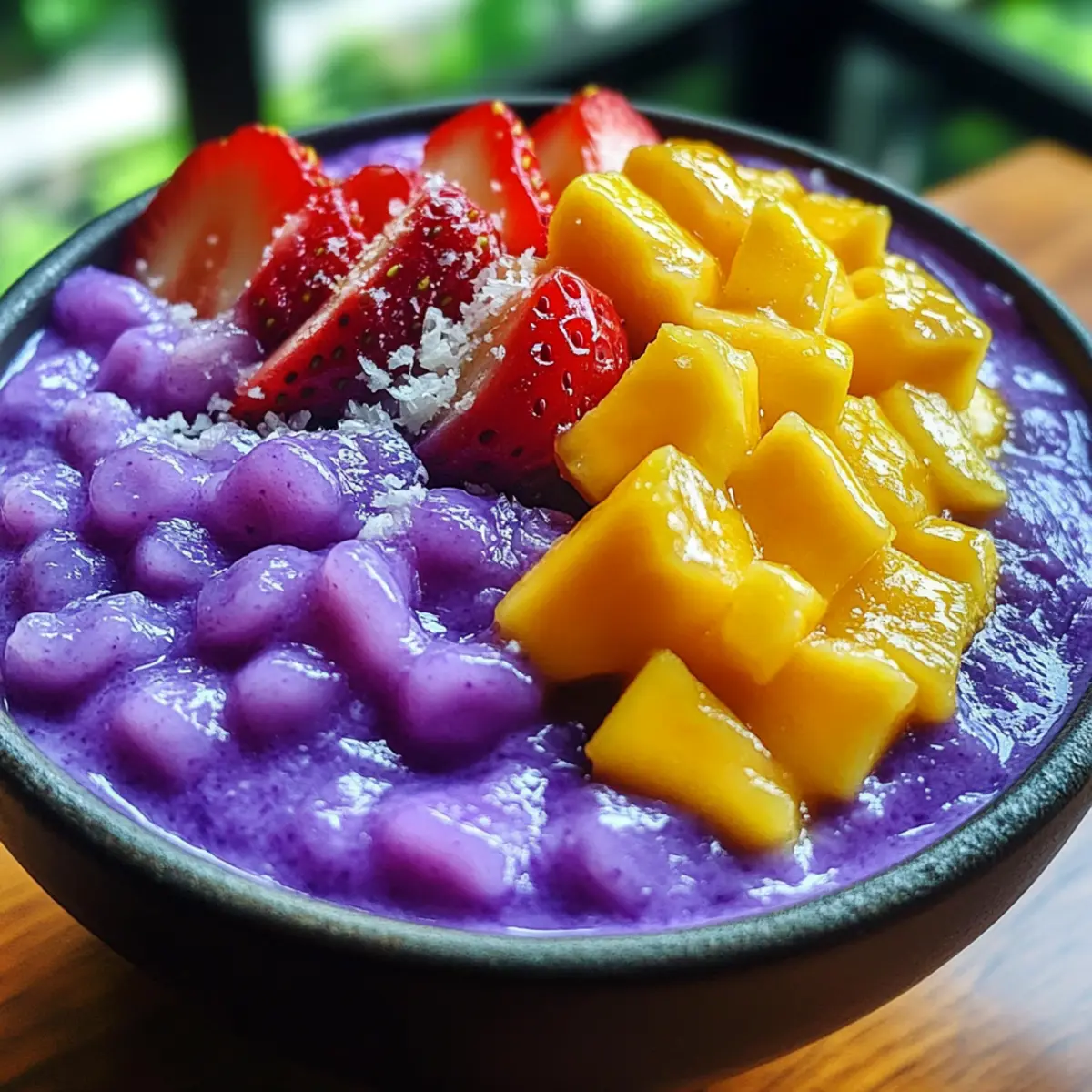
Why is Ube Sago a Must-Try?
Authentic Flavor: Ube Sago captures the essence of Filipino cuisine with its unique blend of ube and coconut, transporting you to a tropical paradise with every bite.
Quick Prep: Ready in 30 minutes, this dessert is ideal for a last-minute treat for guests or an afternoon pick-me-up!
Versatile Options: Customization is key. Feel free to swap the ube for other fruits like mango or strawberries, offering endless variations to satisfy any craving.
Crowd-Pleaser: Visually stunning, its vibrant purple hue garnished with fresh fruit is sure to impress everyone at the table—perfect for parties or family gatherings!
Chewy Delight: The small tapioca pearls lend a delightful chewy texture that beautifully complements the creamy base, providing a fun eating experience.
Healthier Choice: Dairy-free versatility! Substitute non-dairy milk to make this dessert accessible for everyone, catering to various dietary preferences easily.
Ube Sago Ingredients
For the Base
• Small Tapioca Pearls – Provides the signature chewy texture; cook until translucent for the best result.
• Ube Halaya – Adds rich, sweet ube flavor and beautiful color; increase to ½ cup if you crave a sweeter dessert.
• Milk – Adds creaminess; swap for any plant-based milk for a tasty, dairy-free option.
• Coconut Milk – Infuses a tropical richness into the dessert.
• Ube Extract – Enhances the ube flavor and color; optional but contributes an intense purple hue.
• Vanilla Extract – Complements ube’s sweetness; though optional, it’s recommended for added depth.
For Serving
• Chopped Fruit (e.g., strawberries, mango, peaches) – Use for serving, adding a fresh, colorful touch to your Ube Sago.
Step‑by‑Step Instructions for Ube Sago
Step 1: Cook Tapioca Pearls
Bring a pot of water to a rolling boil over medium-high heat. Add the small tapioca pearls and stir occasionally to prevent them from sticking. Lower the heat to medium and let them cook for about 25 minutes until they turn completely translucent. Once cooked, you’ll see them floating; that’s your cue to move to the next step!
Step 2: Prepare Sago
After cooking, drain the tapioca pearls in a fine mesh sieve, then rinse them under cold water to stop the cooking process. Next, soak them in a bowl of cold water for a few minutes to ensure they remain chewy and prevent sticking. This will help maintain their texture as you prepare your Ube Sago.
Step 3: Mix Ube Base
In a large mixing bowl, combine the ube halaya and coconut milk. Whisk them together until they form a smooth, creamy mixture—this will serve as the delicious base for your Ube Sago. If necessary, you can use an electric mixer to achieve an even smoother consistency. Set this aside as you continue with the next steps.
Step 4: Combine All Ingredients
Gradually stir in the milk, ube extract, and vanilla extract into the ube mixture. Whisk everything together until well blended, creating a luxurious and fragrant creamy base. The striking purple hue will begin to emerge, making it visually appealing. Make sure to taste-test for a balanced flavor, adjusting if you desire additional sweetness.
Step 5: Finalize Sago
Now it’s time to bring everything together! Drain the soaked tapioca pearls from the cold water and gently fold them into the ube mixture. Stir carefully to ensure that the pearls are evenly coated, allowing their chewy texture to shine. You can choose to serve immediately or refrigerate for about an hour for a chilled dessert experience.
Step 6: Garnish and Serve
As a finishing touch, consider garnishing your Ube Sago with chopped fresh fruit, such as strawberries or mango, for added freshness and color. This optional step not only enhances the flavor but also makes your dessert even more inviting. Serve in individual cups or bowls and enjoy your delightful creation!
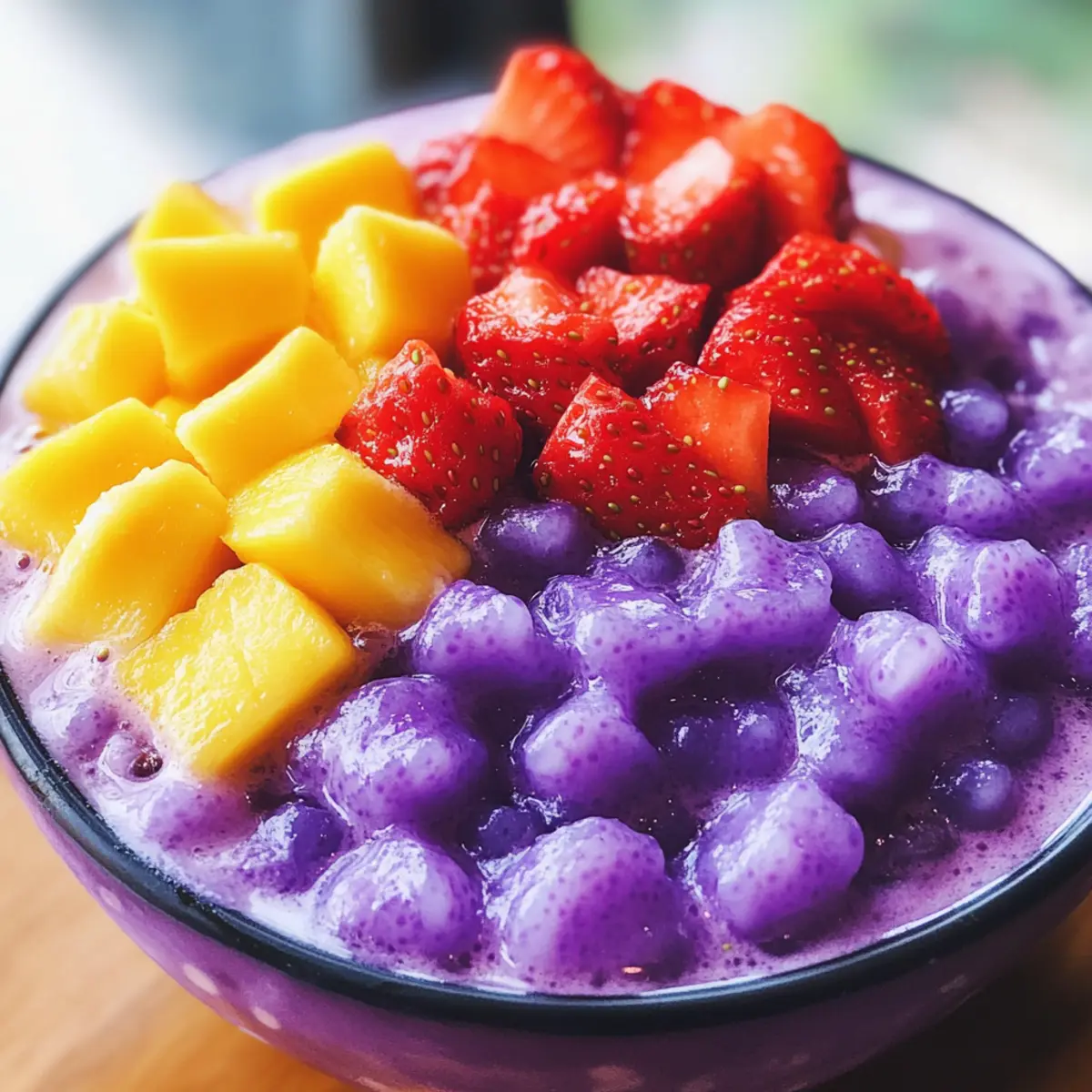
What to Serve with Creamy Ube Sago
Elevate your Ube Sago experience with delightful pairings that add flavor and texture to this tropical treat.
- Fresh Tropical Fruits: Juicy mango or strawberries create a vibrant contrast, enhancing the fruity notes of the creamy dessert.
- Coconut Milk Ice Cream: The creamy coconut flavor harmonizes beautifully with the ube, making for a refreshing accompaniment on warm days.
- Honey-Drizzled Toast: A slice of warm, toasted bread drizzled with honey adds a delightful crunch and sweetness, perfect for pairing.
- Mint Infused Iced Tea: This refreshing drink brings a herbal note, balancing the sweetness of Ube Sago while keeping your palate refreshed.
- Chocolate Dipped Biscotti: The crunchy, buttery texture dipped in rich chocolate complements the smooth creaminess of the dessert for a perfect contrast.
- Crispy Fried Banana: This sweet and savory treat adds a delightful crunch and a familiar tropical flavor that beautifully complements the Ube Sago.
- Chilled Lemonade: The tart citrus flavor cuts through the richness, making this pairing light and invigorating, especially during summer gatherings.
- Espresso: A small cup of rich, bold espresso provides a powerful contrast to the dessert, offering a wonderfully balanced finish to your meal.
Expert Tips for Ube Sago
-
Perfectly Cooked Pearls: Ensure tapioca pearls are fully translucent; this prevents them from being chewy in the center, which can ruin the texture of your Ube Sago.
-
Smooth Ube Base: To avoid lumps, mix ube halaya with a bit of milk first before adding to the rest of the ingredients; this creates a creamy base.
-
Use Fresh Ingredients: Always opt for fresh ube halaya and coconut milk for the best flavor. Check expiration dates if using store-bought.
-
Adjust Sweetness: Taste the mixture before adding all the milk and adjust sweetness as needed, especially if you’re using variations like mango or strawberry.
-
Chill for Texture: Refrigerate your Ube Sago for at least an hour before serving; chilling enhances the flavors and improves the overall texture.
Ube Sago Variations & Substitutions
Feel free to play around with this recipe and discover your favorite twists on this tropical treat!
-
Dairy-Free Delight: Swap regular milk for any plant-based alternative like almond or oat milk to keep it creamy and delicious.
-
Fruity Fusion: Replace ube halaya with other purées like mango or strawberry for a fruity spin. Each offers a unique taste and color that’s equally delightful.
-
Tropical Twist: Add a splash of pineapple juice for a refreshing tropical flavor that harmonizes beautifully with the coconut milk.
-
Extra Texture: Toss in some crushed nuts like cashews or almonds for an added crunch that contrasts with the chewy tapioca pearls.
-
Zesty Boost: Mix in a teaspoon of lime or lemon zest for a zesty flavor infusion that brightens the entire dish. It’s a perfect way to balance the sweetness!
-
Sweet Condensed Drizzle: Drizzle a bit of sweetened condensed milk over the top when serving to enhance sweetness; it gives both flavor and a lovely presentation.
-
Chilled Variations: Consider freezing some of your Ube Sago mixture in popsicle molds for a fun dessert that’s perfect for warmer days.
-
Ube Swirl: For a layered effect, separate part of the Ube Sago mixture and color it differently or use different flavors; create a marbled look for a visually stunning dessert.
By embracing these variations, you can transform this classic Ube Sago into a delightful array of flavors! And if you’re intrigued by other tropical delights, don’t forget to check out our Mango Sticky Rice that celebrates similar textures and flavors! Enjoy your kitchen adventure!
Storage Tips for Ube Sago
Fridge: Store Ube Sago in an airtight container, and it can be kept in the refrigerator for up to 3 days. This helps maintain its creamy texture and ensures freshness.
Freezer: While it’s best enjoyed fresh, you can freeze Ube Sago for up to 2 months. Just be aware that the texture may change slightly upon thawing.
Reheating: If you prefer to serve Ube Sago warm, gently reheat it in the microwave in short intervals, stirring in between to maintain creaminess.
Serving Fresh: For optimal flavor and texture, always serve Ube Sago chilled or fresh. If garnishing with fruit, add it just before serving to maintain freshness and appeal.
Make Ahead Options
Ube Sago is perfect for busy home cooks looking to save time without sacrificing flavor! You can prepare the tapioca pearls and ube mixture up to 24 hours in advance. Cook and soak the tapioca as directed, then store them in an airtight container in the refrigerator to maintain their chewy texture. The ube base (ube halaya, coconut milk, and other ingredients) can also be mixed ahead of time and refrigerated. When you’re ready to serve, simply combine the soaked tapioca pearls with the ube mixture and garnish with fresh fruit for a delightful finish. This way, you can have a delicious Ube Sago ready to impress your guests without the rush!
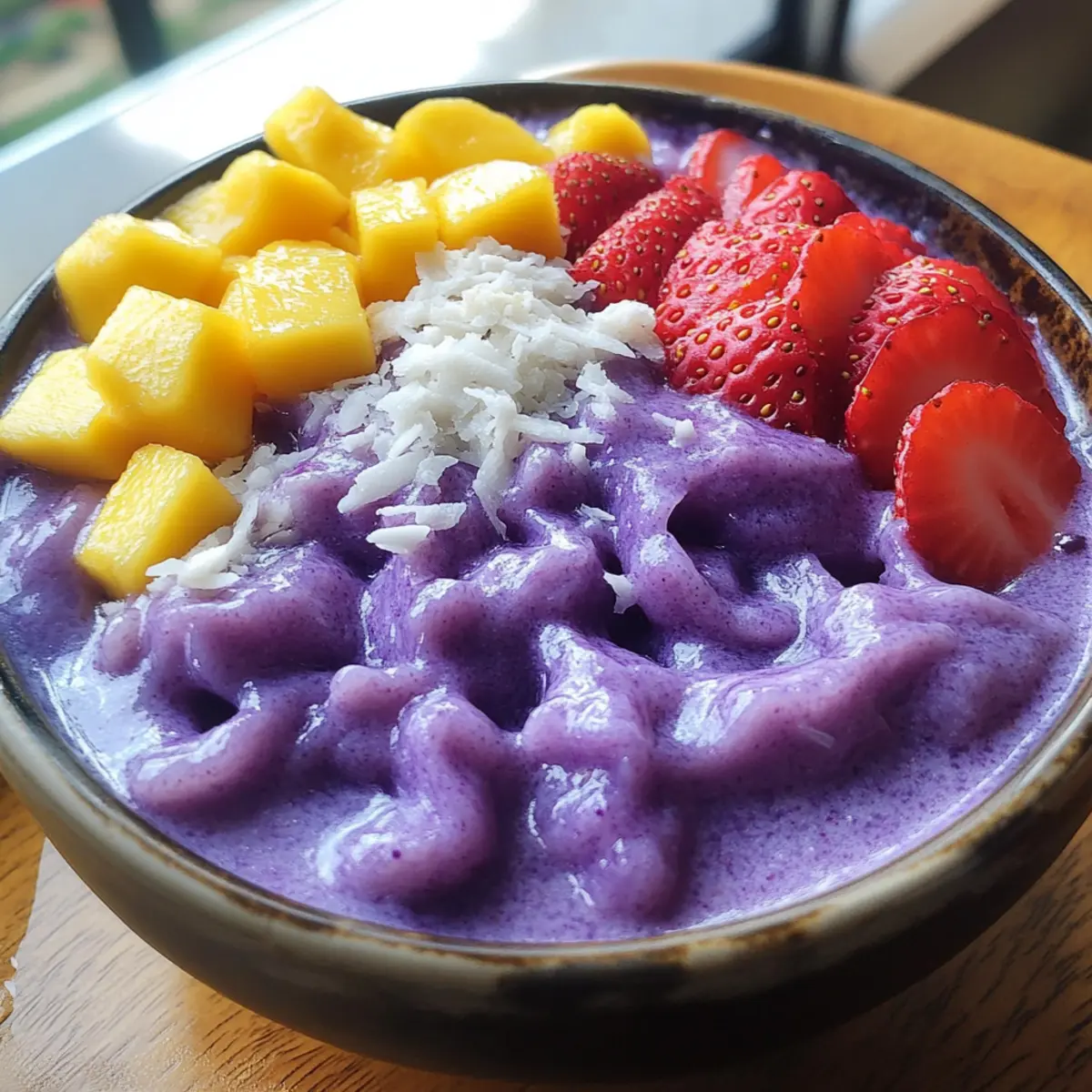
Ube Sago Recipe FAQs
What type of tapioca pearls should I use for Ube Sago?
For the best texture, opt for small tapioca pearls, as they provide that signature chewiness. Make sure they are cooked until completely translucent, which takes about 25 minutes of simmering. Watch for them to float, indicating they’re sufficiently cooked.
How do I store leftover Ube Sago?
Store Ube Sago in an airtight container in the refrigerator for up to three days. This ensures your dessert retains its creamy texture and freshness. Don’t forget to garnish with fresh fruit just before serving to keep the fruits vibrant!
Can I freeze Ube Sago?
Absolutely! Ube Sago can be frozen for up to two months. To freeze, scoop it into airtight containers or freezer-safe bags. Let it thaw in the refrigerator before enjoying it again, although the texture may slightly change. Stir well before serving.
What if my tapioca pearls turn out gummy or hard?
If your tapioca pearls become gummy or hard, it’s likely they were either undercooked or overcooked. Ensure they’re cooked until they’ve turned completely translucent, and if you find they are chewy in the center, cook them a little longer. After cooking, remember to rinse them under cold water to halt the cooking process.
Is Ube Sago suitable for those with dietary restrictions?
Yes! You can easily make Ube Sago vegan and dairy-free by substituting regular milk and coconut milk with plant-based alternatives like almond or oat milk. Also, ensure that your ube halaya is free from allergens if you’re serving guests with food sensitivities.
What variations can I try with Ube Sago?
While ube is a fabulous base flavor, you can experiment with other fruits like mango or strawberry. Simply substitute the ube halaya with the fruit puree, adjusting the sweetness to your preference. Top your variations with fresh, vibrant fruits for added freshness—it’s all about creativity!
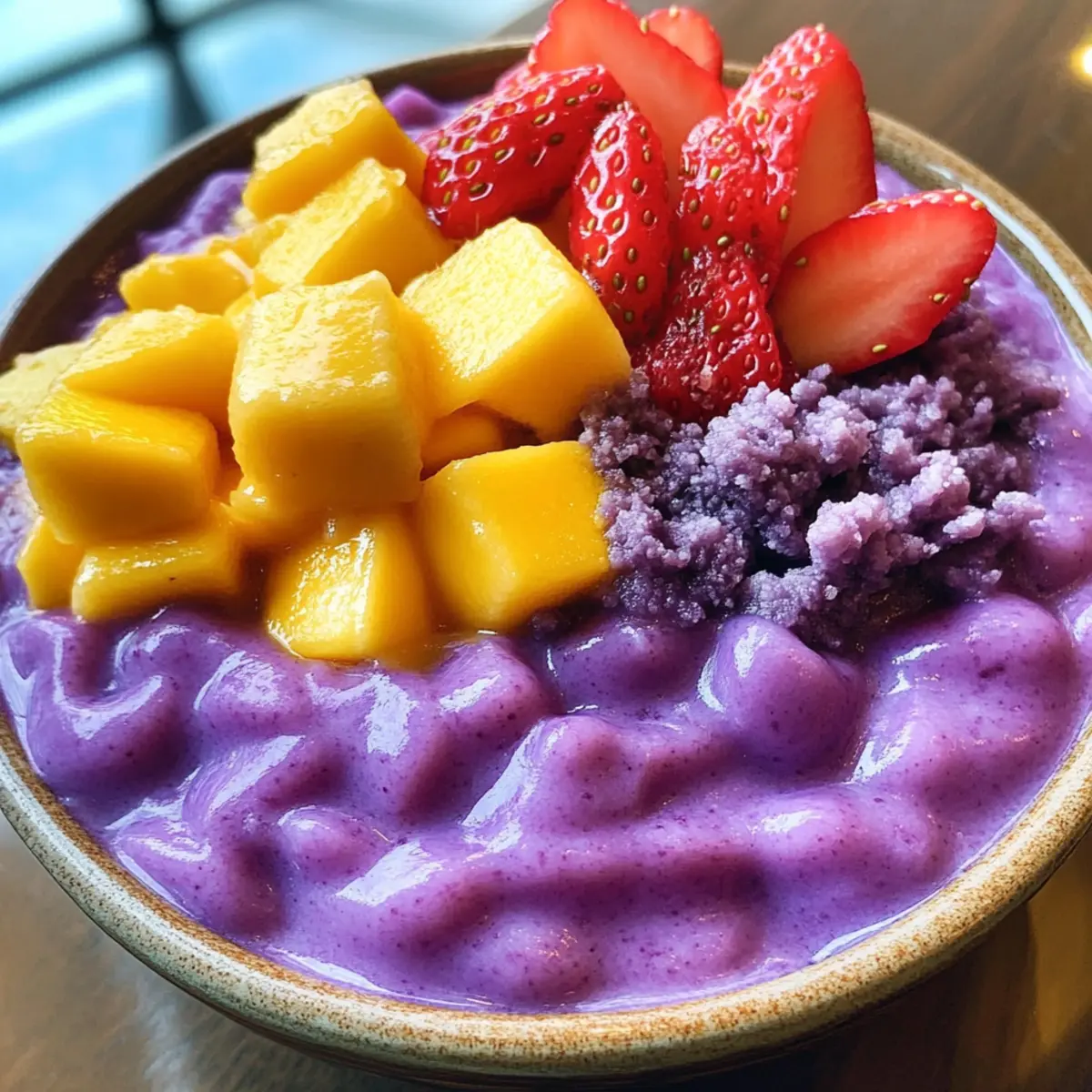
Delicious Ube Sago: A Creamy Filipino Dessert to Savor
Ingredients
Equipment
Method
- Bring a pot of water to a rolling boil over medium-high heat. Add the small tapioca pearls and stir occasionally to prevent them from sticking. Lower the heat to medium and let them cook for about 25 minutes until they turn completely translucent.
- After cooking, drain the tapioca pearls in a fine mesh sieve, then rinse them under cold water to stop the cooking process. Next, soak them in a bowl of cold water for a few minutes.
- In a large mixing bowl, combine the ube halaya and coconut milk. Whisk them together until they form a smooth, creamy mixture.
- Gradually stir in the milk, ube extract, and vanilla extract into the ube mixture. Whisk everything together until well blended.
- Drain the soaked tapioca pearls from the cold water and gently fold them into the ube mixture.
- Garnish your Ube Sago with chopped fresh fruit, such as strawberries or mango, for added freshness and color.